The World Molecular Imaging Society is pleased to present three exceptional candidates for president elect. Review each nominees profile, envision statement, then cast your vote.
Cast your vote before the election ends on September 3 at 11:59 PM PT.
2026 President-Elect Nominees
The nominees below are presented in alphabetical order by last name
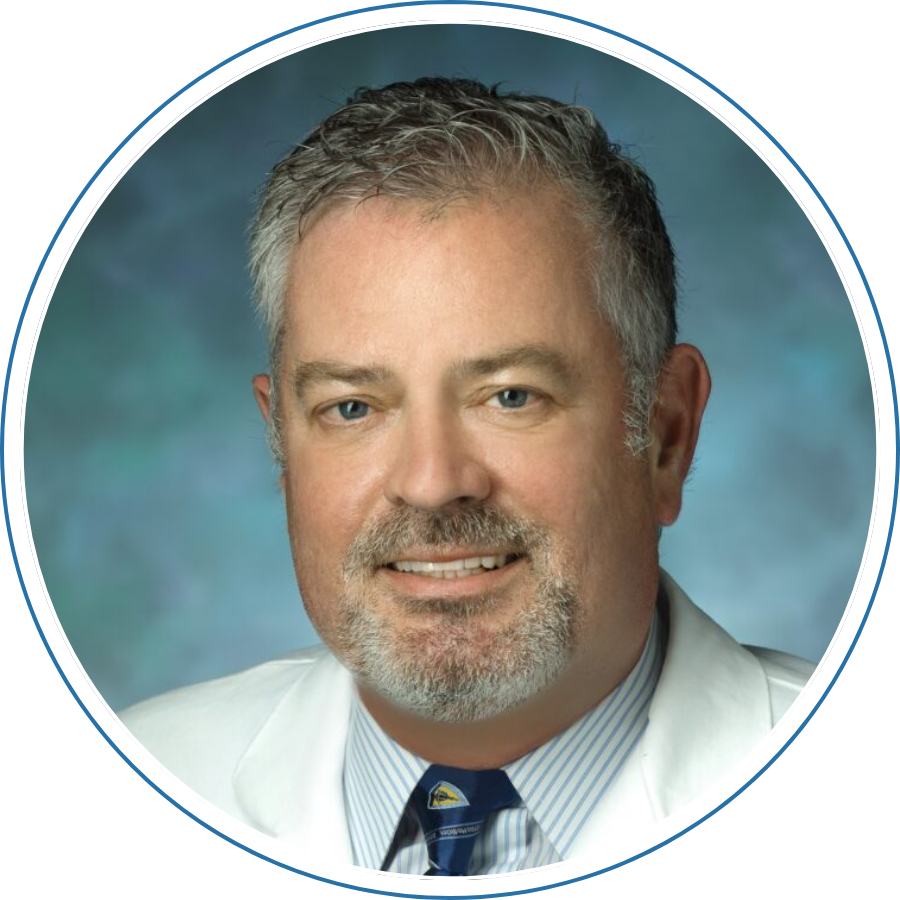


Jeff W. M. Bulte, PhD
Professor of Radiology, Oncology, Biomedical Engineering, and Chemical & Biomolecular Engineering
Inaugural Director of Scientific Communications, Department of Radiology
Director of Cellular Imaging, Institute for Cell Engineering
The Johns Hopkins University School of Medicine
I am honored to run for president. Since attending my first meeting in Boston in 2002, I have not missed a single one, and had the privilege of serving in SMI/WMIS leadership for nearly 25 years. Our society has been central to my scientific career and, more importantly, has connected me with an extraordinary community of colleagues, mentors, and friends. I am committed to building on this strong foundation and helping our Society thrive in 2027 and beyond.
My first priority would be to make our Society even more inclusive and member-driven. I believe our programs and priorities should be shaped from the bottom up—by listening to our members and ensuring that every generation, discipline, geography, and career stage has a meaningful voice. Our strength lies in the diversity and creativity of our community, and we should harness that collective expertise to define where molecular imaging goes next. We must also strengthen the Society’s sustainability and advocacy. We are entering a period of considerable uncertainty in public funding and investment in science. We should proactively diversify our sources of support through philanthropy and partnerships beyond traditional industry sponsorship. Named lectureships, philanthropic initiatives, and other creative mechanisms could both strengthen our financial foundation and raise the visibility of molecular imaging. At the same time, we need a stronger collective voice advocating for our field and its critical role in biomedical research.
Our next generation must be at the center of this effort. We should make our meetings increasingly attractive and accessible to young scientists, providing opportunities not only to present their work, but also to build collaborations, develop leadership skills, and shape the future of our Society. Through my involvement in organizing meetings for ISMRM, EMIM, and CMR, I have seen firsthand the value of bringing diverse imaging communities together. I would build on these experiences to strengthen our connections with organizations beyond traditional imaging, including AACR, ADA, AHA, JDRF, and SFN. By reaching into the broader biomedical community, we can expand both the visibility and the impact of molecular imaging. Scientifically, we should embrace both innovation and integration. Molecular imaging has the potential to transform how we detect disease, guide interventions, personalize treatment, and monitor response and recurrence. Emerging technologies—including MPI, Raman imaging, and MALDI imaging—offer exciting new opportunities. By integrating these approaches with established imaging technologies, we can accelerate the journey from proof-of-concept, through preclinical validation, to clinical translation.
Our ambition should go beyond improved diagnosis and treatment. Our journal Molecular Imaging and Biology captures a larger vision: imaging can be a tool not only for answering clinical questions, but also for discovering fundamental biology. Transmission electron microscopy transformed our understanding of molecular and cellular biology in the 1950s. In the late 2020s, I believe we have the opportunity to do something equally transformative with in vivo molecular imaging. This is an exciting time for our field. I would be honored to serve as President and to work with all of you to make our Society more inclusive, more connected, more sustainable, and more influential—while advancing the science that brought us together in the first place.
Jeff W. M. Bulte, Ph.D., is Professor of Radiology, Oncology, Biomedical Engineering, and Chemical & Biomolecular Engineering at the Johns Hopkins University School of Medicine. He is the inaugural Director of Scientific Communications in the Department of Radiology, Director of Cellular Imaging at the Johns Hopkins Institute for Cell Engineering, and has been a Research Council advisor to the Dean’s Office for over 10 years.
Dr. Bulte received his undergraduate and graduate training in the Netherlands, focusing on tumor biology and immunology. He subsequently joined the National Institutes of Health, where he spent a decade developing MRI contrast agents for cell tracking. He was recruited to Johns Hopkins in 2001 and has been a faculty member for 25 years. His research focuses on the development of novel contrast agents and nanotheranostic technologies for molecular and cellular imaging, with particular emphasis on in vivo cell tracking and regenerative medicine. He was part of the team that conducted the first clinical cell tracking trial in cancer patients. His current research explores Chemical Exchange Saturation Transfer (CEST) MRI and Magnetic Particle Imaging (MPI) for molecular imaging applications, advancing these emerging technologies toward biomedical and clinical translation.
Dr. Bulte has received numerous honors for his contributions to molecular and cellular imaging, including the Gold Medal of ISMRM, and has been elected a Fellow of ISMRM, WMIS, AIMBE, and IAMBE. He is also a Distinguished Investigator of the American Academy of Radiology. Throughout his career, Dr. Bulte has provided extensive leadership in professional societies. He served two terms as a Council Member of the Society for Molecular Imaging (SMI; 2004–2006 and 2010–2011), as a Trustee of WMIS (2011–2014), and as a non-nuclear Board Member of the Society of Nuclear Medicine and Molecular Imaging (SNMMI; 2012–2014). Within ISMRM, he served two terms as Chair of the Molecular and Cellular Imaging Study Group (2006–2007 and 2020–2021). He has been an active member of the scientific program committees for the World Molecular Imaging Congress (WMIC) and European Molecular Imaging Meeting (EMIM) for many years. Since 2018, he has chaired the WMIS MINT Interest Group, which has grown under his leadership to become the Society’s second-largest interest group.
Dr. Bulte has also made significant contributions to the field through editorial leadership. He serves as Senior Editor of our society Journal MIB, as Associate Editor for Radiology, Radiology: Imaging Cancer, WIREs Nanomedicine and Nanobiotechnology, and Molecular Imaging. He is also an Editor for Tomography, the International Journal of Magnetic Particle Imaging, Pharmaceutics, ACS Chemical & Biomedical Imaging, ACS Nano Medicine, and RSC Sensors & Diagnostics. With more than two decades of leadership in molecular imaging, extensive experience across major imaging societies, and a research program spanning molecular imaging, cell tracking, nanotheranostics, cancer treatment, CEST MRI, and MPI, he can bring a broad and interdisciplinary perspective to advancing our field and its clinical translation.

Edward (Jim) Delikatny, PhD
Research Professor
Director of Translational Research, Center for Precision Surgery
Director, Small Animal Imaging Facility
Department of Radiology
The University of Pennsylvania
It is a great honor to be nominated for President of the World Molecular Imaging Society. I have been a member of the Society since 2007, when it was still the Society of Molecular Imaging. The WMIS is my home society, I have attended every meeting since 2009, and am deeply involved in its operation. The WMIS has been a major part of my research and development for the last 20 years. The annual WMIC meeting has always been a home for innovation, a place where wild new ideas are born and have the space to develop into reality. The WMIC has served as a major incubator for molecular imaging science, allowing technologies that started as a “Star Trek” moment in someone’s lab to grow and progress to clinical translation. A perfect example of this is the field of Optical imaging, which has long been a major focus at WMIC. The Optical Surgical Navigation Interest Group has been promoting this technology, resulting in 3 FDA approvals for near infrared probes for surgical guidance in the last 5 years, with many more probes in clinical trials. As existing technologies mature, new ideas arise to take their place. Artificial intelligence, spatial proteomics, NAMS, alpha emitting theranostics, and short wave infrared optical imaging represent emerging frontiers that WMIC is uniquely positioned to embrace, ensuring the continued growth, relevance, and vitality of the society for years to come.
We currently face a number of challenges in the field. Reductions in grant money and restrictions on travel funding threaten research labs and participation in live meetings. We face an era of visa uncertainty and travel reluctance that affects attendance at the Annual Meeting and workshops. Our goals are to ensure that the Society remains vibrant and viable for years to come. As President of the Society, I will work tirelessly towards addressing these issues. One primary focus would be on fostering and nurturing young molecular imaging scientists, particularly in insuring their participation in the meeting and in the Society. I believe we need to increase the number and the value of trainee travel stipends to increase meeting attendance and foster cutting-edge research. We need to create greater opportunities for junior members to engage in WMIS committees and interest groups and ensure that education programs are tailored to address their needs and support their professional development. We need to expand networking opportunities that promote collaboration and mentorship, ensuring that the next generation is fully engaged and becomes an integral part of our Society. We will work closely with Interest Groups such as the Early Professionals in MI (EPMI) and WIMIN, building on their strong track records in mentoring trainees and junior professionals to expand networking and professional development across the society.
We must maintain and strengthen our international presence. As the World Molecular Imaging Society, we have a responsibility to advance molecular imaging through education, collaboration, and knowledge-sharing on a global scale. We should actively encourage international participation in our meetings and workshops. We should prioritize meeting venues that maximize accessibility to a world-wide membership, particularly to those in Asia and Europe, as well as growing molecular imaging communities in South America and Africa. Having participated in several online WMIS workshops and seminars, I have seen first-hand the exceptional quality of these webinars, as well as strong attendance and enthusiasm they generate. We should build on this by providing additional virtual opportunities, which provides more accessible avenues for international involvement with lower cost and barriers.
We need to continue to expand our role in translating molecular imaging science. We will seek to expand the involvement of industry partners, not only as potential sponsors, but also as valued contributors of scientific expertise, innovation, and educational content. The WMIS has benefited from the involvement of Interest Group leaders from industry (ADDMI and EPMI, for example) which provides the Society with valuable connections to leaders across the corporate molecular imaging community. We should build on these relationships while expanding our engagement with regulatory agencies, such as the FDA, to educate and encourage translation of molecular imaging technologies. The 2024 OSN Workshop in Montreal featured presentations and panel discussions with the FDA, followed by the FDA’s release of an Industry Guidance on Developing Drugs for Optical Imaging. We need to continue to nurture these relationships, working to provide guidance on regulatory and reimbursement pathways that will help establish FDA-approved imaging agents from development into routine clinical practice.
Finally, I would like to see the WMIS more involved in government-level advocacy. Many of our sister societies, AACR, AAPM and the Academy of Radiology Research have established effective government advocacy practices. I propose that WMIS collaborates with these societies to explore developing a stronger collective advocacy group for molecular imaging science.
In summary, with 30 years of experience in imaging research and education, in addition to decades of involvement with the WMIS, I have a clear vision for the future of our society and the experience, perspective, and commitment needed to lead this Society forward. I am honored and grateful to be nominated for the presidency, and I ask for your consideration of my candidacy.
Jim Delikatny is a Research Professor in the Department of Radiology at the University of Pennsylvania. He is the Director of Translational Research for the Center for Precision Surgery and the Faculty Director of the Small Animal Imaging Facility at Penn. His research interests focus on near infrared (NIR) fluorescence contrast agent design for cancer detection in tumor models and translation into large animal and clinical settings. Dr. Delikatny received a Bachelor’s degree in Chemistry and Environmental Studies at the University of Winnipeg, spent 3 years as a research technician in the Pathology Department at the University of Manitoba, before entering a Ph.D. program in Physical Chemistry at the University of British Columbia. He was awarded a postdoctoral fellowship at the University of Sydney in the Department of Cancer Medicine, rising to faculty in the Departments of Cancer Medicine and Medical Education, where, in addition to research, he was integral in the implementation of the new Problem Based Learning medical curriculum. He was recruited to Penn Radiology in 2000 to develop a molecular imaging program based on altered lipid metabolism in tumors.
Dr. Delikatny is a long-standing member of the World Molecular Imaging Society. He has served 2 terms on the Program Committee and acted as Poster Chair for 3 WMIC meetings. He was a member of the Board of Trustees from 2019-2023, during which time he served as Chair of the Education Committee, overseeing its major reorganization and expansion. He is currently a member of the Awards Committee and Co-Chair of the Optical Surgical Navigation (OSN) Interest Group, where he has been responsible for organizing the OSN workshops at the WMIC for over a decade. In 2026, he served as the Co-Convener for both the Preclinical Imaging Consortium in Philadelphia, PA, and the Contrast Media Research meeting in Santa Fe, NM, two scientific meetings sponsored by the WMIS.
Dr. Delikatny’s has extensive experience in MR spectroscopy and imaging and in multiple optical imaging modalities, including NIR fluorescence, bioluminescence, Cerenkov, and short-wave infrared (SWIR) imaging. His current research interests are in the development of targeted NIR probes for intraoperative detection of tumor margins in mouse models and their translation into the clinic. He has developed a library of molecular probes to detect lipid metabolic and microenvironmental targets associated with tumor progression and response to therapy, including lipid kinases, phospholipases, pH, and redox-based probes. One of these is a NIR fluorescent probe for in vivo detection of choline kinase, a biomarker overexpressed in a wide range of tumors. This probe has successfully completed owner-consented veterinary clinical trials for detection of spontaneous non-small cell lung cancer in patient dogs and is now advancing toward a first-in-human clinical trial. Two classes of activatable probes have been developed for detection of the signaling phospholipases, PLA2 and PLC, overexpressed in lung and many other tumors. The PLA2 probes are advancing toward a veterinary clinical trial, expected to begin within the next year. His recent research efforts have focused on the synthesis and characterization of low molecular weight water soluble SWIR tracers, which hold great promise for deep tissue, high resolution optical imaging. Dr. Delikatny has received numerous honors for research and teaching, including the Distinguished Investigator Award from the Academy of Radiology Research. He became a Fellow of the World Molecular Imaging Society in 2023.

Michelle L. James, PhD
Associate Professor, Radiology – Rad/Molecular Imaging Program at Stanford
Associate Professor, Neurology and Neurological Sciences
Stanford Medicine
I am honored to stand as a candidate for President-Elect of the World Molecular Imaging Society. WMIS is where I grew up as a scientist. As a trainee under the mentorship of Sam Gambhir, I attended my first WMIC in Nice, France. There I found a community that truly welcomed me, and over the years I have been fortunate to find mentors, collaborators, and friends for life in our molecular imaging community. Today, watching my own trainees discover that same community within WMIS, I feel a deep pull to give back to a society that has given me so much, and to help ensure the next generation has that same experience.
I have had the privilege of serving WMIS in several capacities: as a Board Member for three years, contributing to the Society’s strategic direction and governance; as Program Chair in 2021; as Secretary of Women in Molecular Imaging; as Category Chair for Neuroscience for many years; and as a session moderator across numerous WMICs. Together, these roles have given me a broad view of our Society and taught me that WMIS is at its best when it stays close to its members’ needs.
Looking ahead, my vision for WMIS centers on four priorities. First, growing a truly global and diverse membership. Molecular imaging is exploding around the world, and WMIS should support that growth by reaching underrepresented regions, career stages, and backgrounds, so that every member feels the same welcome I did as a young scientist.
Second, strengthening mentorship and training. The mentors I found through WMIS shaped my career and sense of belonging in science. I am committed to expanding these pathways so every member, regardless of position or where they start, has access to guidance and community.
Third, reigniting our culture of incubating early-stage ideas. WMIS has always been a place where creativity, innovation, and out-of-the-box thinking thrive, and I want us to lean further into that spirit. As President, I would create platforms for scientists and entrepreneurs to showcase their bold new concepts, and would pursue engagement from venture capital to help promising ideas spin out into companies, so our members’ innovations can be translated to maximize impact for patients.
Fourth, greater transparency in how our Society operates. As WMIS grows, members deserve clarity on how decisions are made, how leadership is chosen, and how resources are allocated. I am committed to open communication and inclusive governance, so every member understands and trusts how their society works.
WMIS faces real opportunities: an expanding, interdisciplinary field, the rise of AI, a shifting preclinical landscape shaped by organoids and other New Approach Methodologies (NAMs), and a strong pipeline of young scientists, alongside real challenges in sustaining funding, engagement, and inclusivity as we scale. My experience across programming, leadership, and mentorship has prepared me to help navigate both.
I am deeply committed to the global molecular imaging community and to a WMIS that remains, for every member, what it has been for me: a true scientific home.
Dr. James is a tenured Associate Professor in the Departments of Radiology and Neurology, within the Molecular Imaging Program at Stanford University (MIPS). She received her BS in pharmacology and medicinal chemistry at the University of Sydney, where she also earned her PhD in pharmacology and was awarded the University Medal. She served as Co-Chair of WMIC in 2021 and has received numerous awards for her impactful research and mentoring, including the Suffrage Science Award in 2016, the Exceptional Mentor Award from the American Medical Women’s Association in 2018, the Roger Tsien Award from WMIS in 2024, and the Sam Gambhir Trailblazer Award from SNMMI in 2026. She has published over 125 papers and abstracts, and her students have collectively been awarded more than 55 highly prestigious fellowships and highly competitive awards. For over 20 years, her research has focused on developing innovative multi-modality molecular imaging approaches for detecting different aspects of neuroinflammation, innate and adaptive immune cells, and mitochondrial function, in Alzheimer’s disease, multiple sclerosis, ME/CFS, cancer, and many other conditions. Her work has been supported by significant funding from the NIH, private industry, foundations, and philanthropic donors. Dr. James has translated several PET tracers she developed to the clinic, many of which are patented and being used in clinical research studies at Stanford and around the world.
Cast your vote before the election ends on September 3 at 11:59 PM PT.